


Before Poppy was born I was clocking far too few hours of sleep and dragging through the day on coffee alone. Trying to fall asleep earlier was my biggest challenge when I first tried to adjust my sleep habits, so I gave myself a full month of implementing changes before getting discouraged, and it really helped! By the end of two weeks of me really following these tips, I was falling asleep easily at night and waking up feeling refreshed.
I started all these changes about a month before I gave birth to Elliott and kept them up (overall as best as I could) even when I was nursing him throughout the night, and I still was able to have good sleep.
Overall, going to bed by 9:30 pm gives me time to read for a little, and then asleep by 10 pm and waking up at 6am. And when Elliott was born, I moved my bedtime so much earlier (around 8 pm) to give me time to nurse him in the night and still get enough hours of sleep, and that made all the difference. I, of course, was still tired with him, especially when we first brought him home, but NOTHING like the complete exhaustion I experienced with Poppy. I owe a lot of that to getting my sleep in a good place before he was born, so that I had the routine established and it was an easier adjustment to bring him into that.
All that to say, now almost two years later I still track my sleep every night and I get great sleep! Here’s my top five tips:
Swap harsh LEDs for warm, blue-light-blocking bulbs
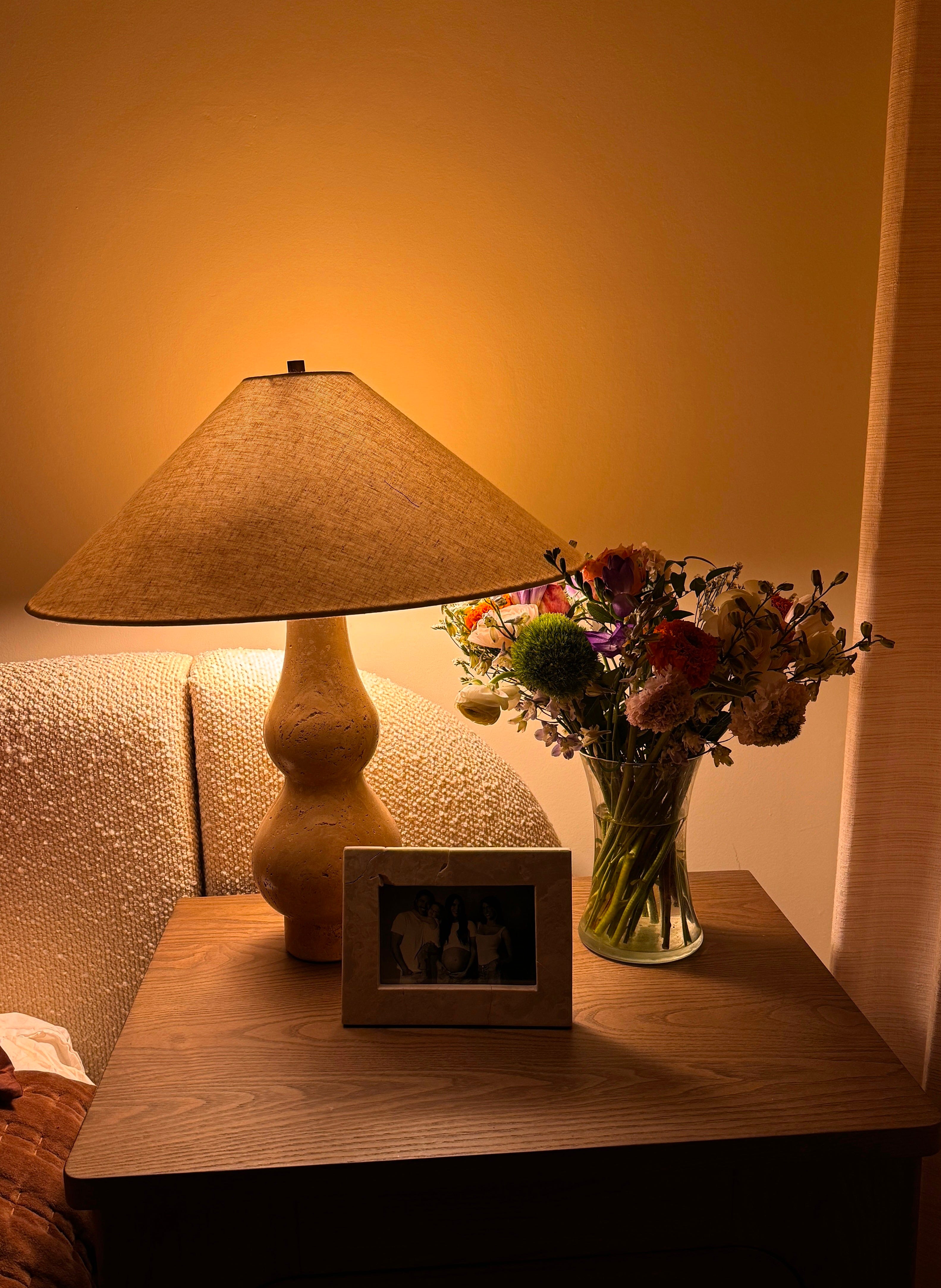
Light rich in blue wavelengths suppresses melatonin release and pushes your internal clock later, shaving off total and deep sleep. I replaced every cool-white LED in our overheads and lamps with soft incandescent or blue-light-filter bulbs to preserve my natural melatonin rhythm and fall asleep faster and more deeply. If you don’t want to swap everything out just keep all overhead lights off and use a lamp so you only need to swap out that one bulb in the room. I unscrewed any canned lighting that was LED so that way if I went to turn it on by habit, they wouldn’t work. This is another reason not to be on screens before bed. If I have to do something before plugging in my phone I make sure my phone is on full red-mode. Or if we watch a movie I wear red-light glasses to block it out.Source: “Blue light has a dark side,” Harvard Health Publishing
Go full darkness with blackout curtains and a sleep mask
Even tiny light leaks (from streetlights or appliance LEDs) can fragment sleep and shorten REM cycles. Installing blackout curtains and wearing a silky sleep mask blocks ambient light entirely, leading to fewer awakenings and higher sleep quality. Black tape works to cover any charging lights.
Source: Sleep Health (January 2023), “Effects of Dim Light Exposure on Sleep Quality”Chase morning sun- even for 15 minutes
Bright natural light first thing in the morning advances your circadian clock and strengthens your 24-hour rhythm, making it easier to fall asleep and wake up at consistent times. Stepping outside for at least fifteen minutes flips on my internal wake-up switch better than any alarm tone.
Source: Figueiro et al., “Modeling the Influence of Daytime Light Exposure on Circadian Rhythms,” Science Advances, 2023Eat early so dinner can digest
Eating close to bedtime forces your body to juggle digestion when it should be repairing and regenerating, leading to more nighttime awakenings and lighter sleep. Finishing dinner at least two hours before bed lets your body focus on rest and repair, resulting in longer uninterrupted sleep. So because I wanted to get in bed by 9:30 I knew dinner (and/or dessert) would need to be finished by 7:30pm and no more eating after that.
Source: St-Onge et al., “Meal Timing and Sleep Quality in Adults,” Journal of Clinical Sleep Medicine, 2021Brain-dump journaling before lights-out
Racing thoughts and mental to-dos fuel nighttime anxiety and delay sleep onset. Spending three to four minutes writing down tomorrow’s tasks or worries “closes” those mental tabs, reducing cognitive arousal and cutting the time it takes to fall asleep. I like putting 3 things I was thankful that happened during the day and my top 3 priority to-dos for the next day.
Source: Kellogg et al., “Putting Worry on Paper: Expressive Writing Reduces Pre-Sleep Arousal,” Journal of Experimental Psychology: General, 2018
Bonus tip: Move your body during the day…take walks, chase the kids, or crank out some steps. Higher daytime activity makes your body crave real sleep at night.
Let me know any tips that you have for getting good sleep in the comments- would love to know!
Thanks for being here,
xx Brittany