


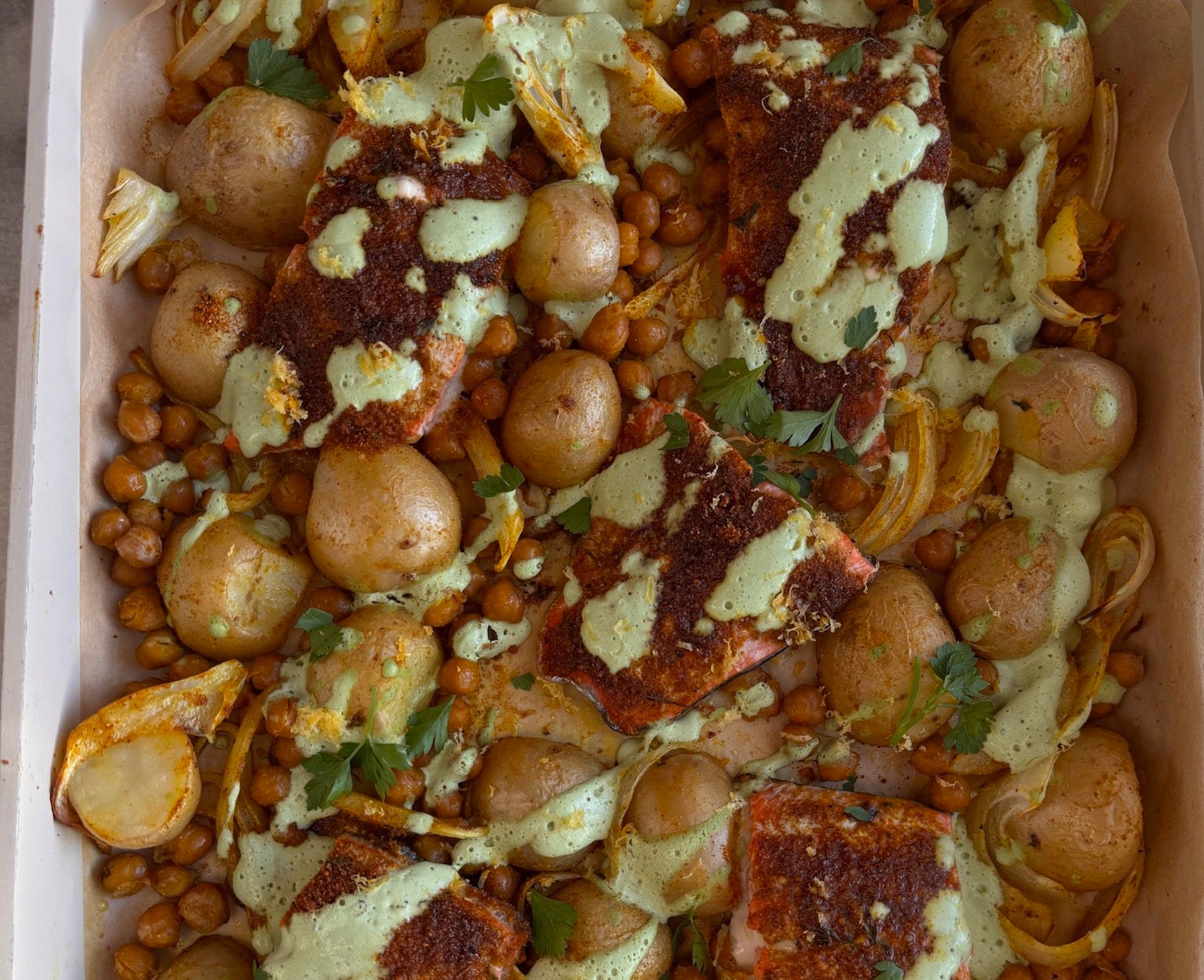
One of the biggest shifts since we moved has been how we think about food—not just what we eat, but how we prepare it, how we sit down for it, and how we treat mealtimes as a family. I mentioned this in a recent podcast episode, but about a year ago—before we really started focusing on our health—I saw cooking as kind of a waste of time. Picking up food to-go felt quicker, easier, and way more efficient, especially since it meant less cleanup. But over this past year, as I’ve started carving out more time to learn (and let go of the pressure to rush through everything), something started to shift.
It really began last summer when I took a sourdough class. I remember feeling so accomplished after making my first loaf—it was simple, but it tasted better than any store-bought bread I’d had. And something about that small win gave me confidence. It made me think, “Maybe I can try more recipes… and actually enjoy it.” It also opened my eyes to the quality of ingredients I was using, and how much more control I could have over what we were eating.
Not long after that, I made a quiet commitment to cook at least one meal a day. It felt manageable—and it gave me room to learn without the pressure of being “good” at it. Some days that means I’m Googling how to chop something properly, or recently, looking up what a double boiler even is. But having the space to slow down and figure things out as I go has made all the difference.
I give myself about an hour each night to make dinner, and I’ll typically double the recipe so it always turns into an easy lunch the next day too. So I’ve actually found it to be efficient—and at the same time, we’re able to prioritize the quality of the food we’re eating. I love putting a meal on the table for my kids knowing where every ingredient came from. And it’s been especially sweet hearing Anthony say he’s been loving my meals. He was the one that would either cook back when we barely cooked, or be the one to run out and pick up food while I was working. So it’s been really meaningful to take that on. It also frees him up to be more productive with the work he’s doing behind the scenes to support our business, so it’s felt like a true team effort.
And of course, there are the days when the leftovers start to pile up—like if we’ve all had big smoothies for lunch and no one ended up touching dinner from the night before. That’s usually when I skip cooking that night so we don’t waste food. It’s not about doing it perfectly every night—it’s just about finding what’s working for us right now and giving ourselves permission to adjust as we go.
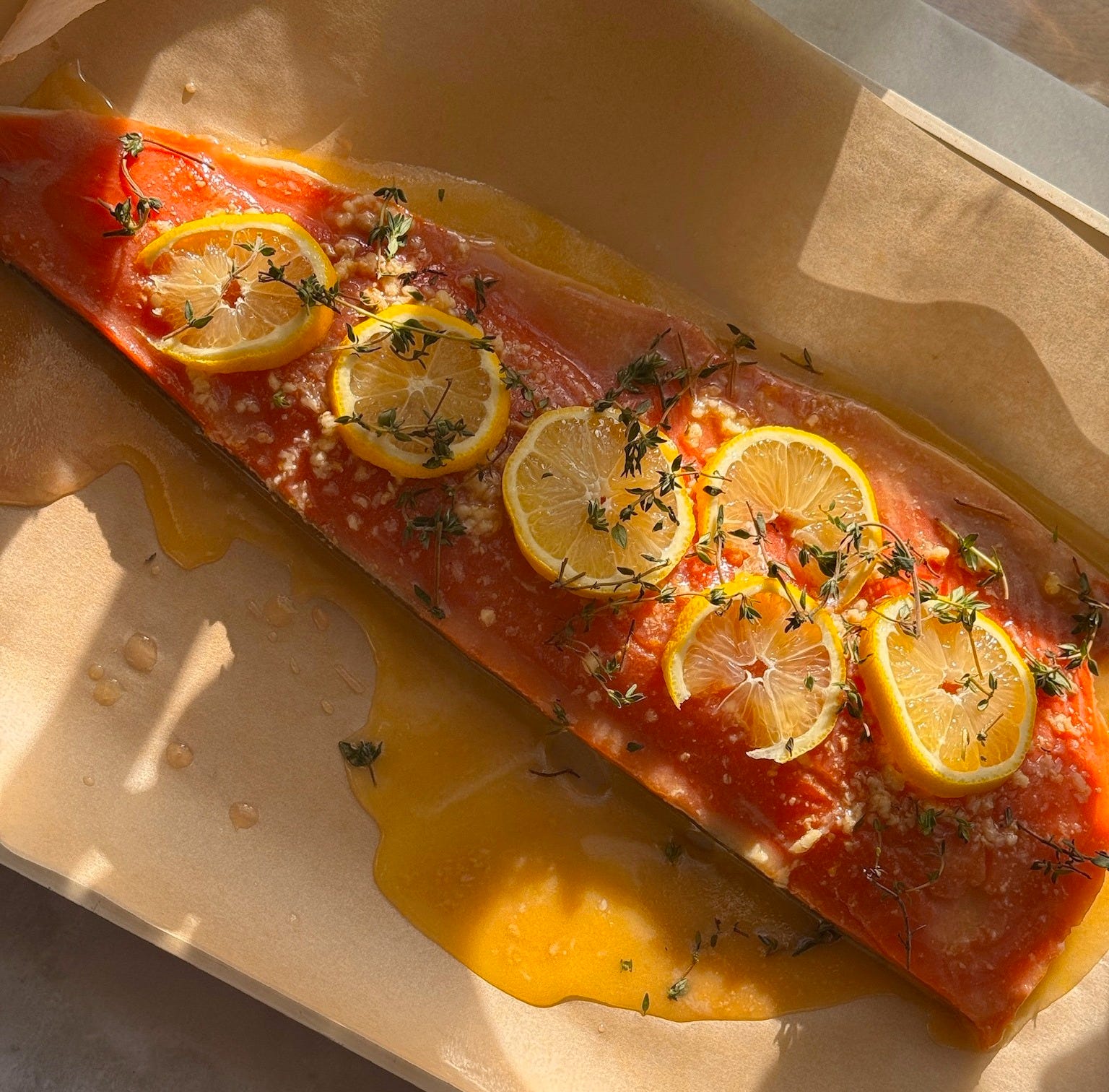
Sheet pan dinners have been one of the easiest ways to stay consistent. I’ve been trying to make salmon twice a week—it’s a nutrient-dense protein and also a low-mercury fish, so it feels like a really good choice for us right now. I usually go for wild-caught Alaskan, and it cooks quickly, pairs well with whatever vegetables we have, and just feels like a good reset meal after a long day. We honestly eat more beef than chicken most weeks, but when we do chicken, I almost always make it on a sheet pan. It stays juicy that way, and I like being able to roast the vegetables alongside it with very little cleanup.
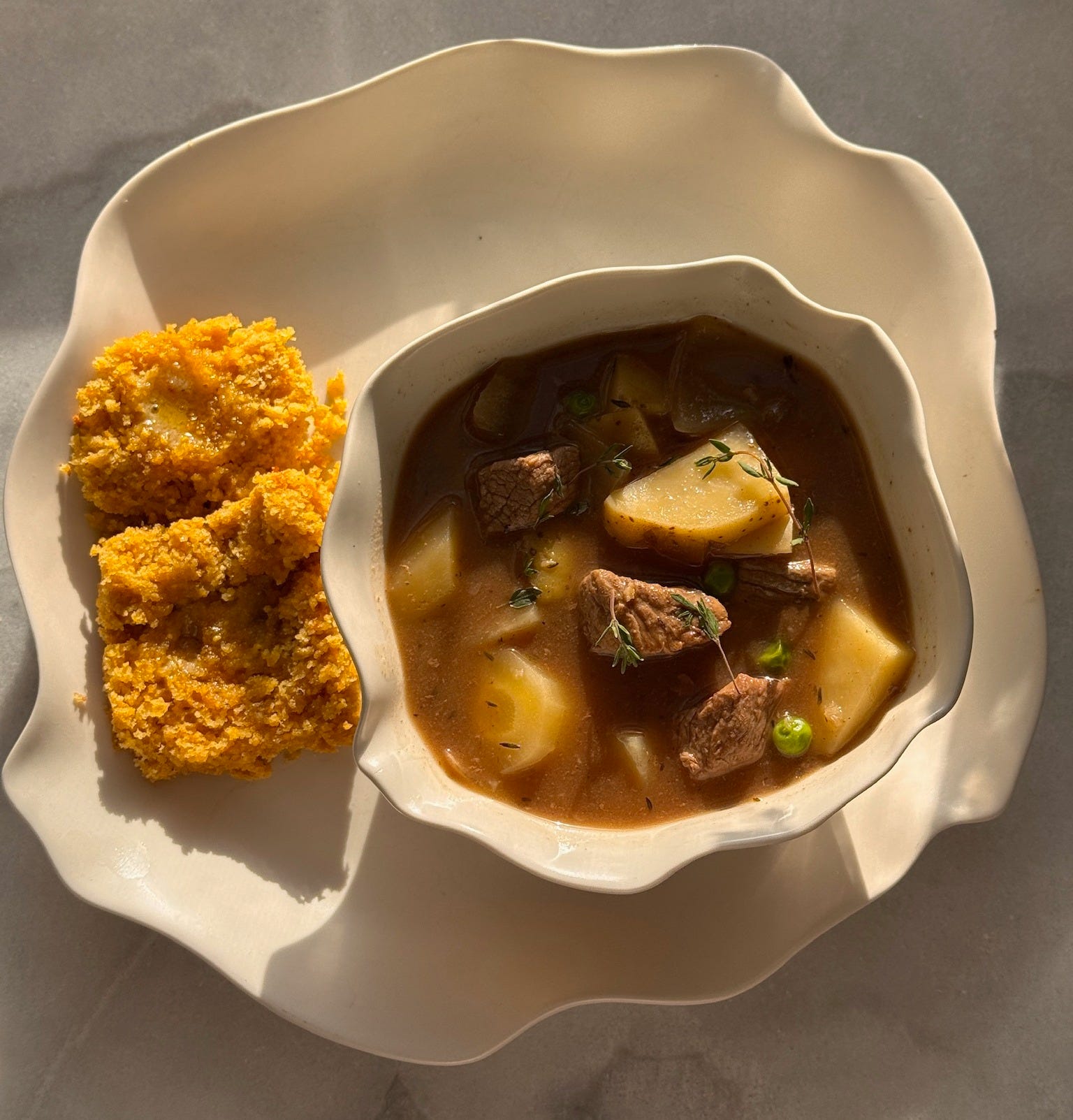
Lately when I think about meals, I try to keep it simple—focusing on a balance of protein and fiber. Most nights, that just looks like some kind of meat and vegetables, but we’ve also been incorporating more rice and beans. On the nights I make a hearty lentil stew, I still like to add a little ground beef for extra flavor and richness. Buying beef from a local farm here has been such a gift. Knowing how the cows are raised and seeing how well they care for them brings so much peace of mind when it comes to what we’re feeding our family. A slow cooker stew or beef and lentil soup has become a favorite—especially on the days I can prep it in the morning and not think about dinner again until we’re ready to eat.
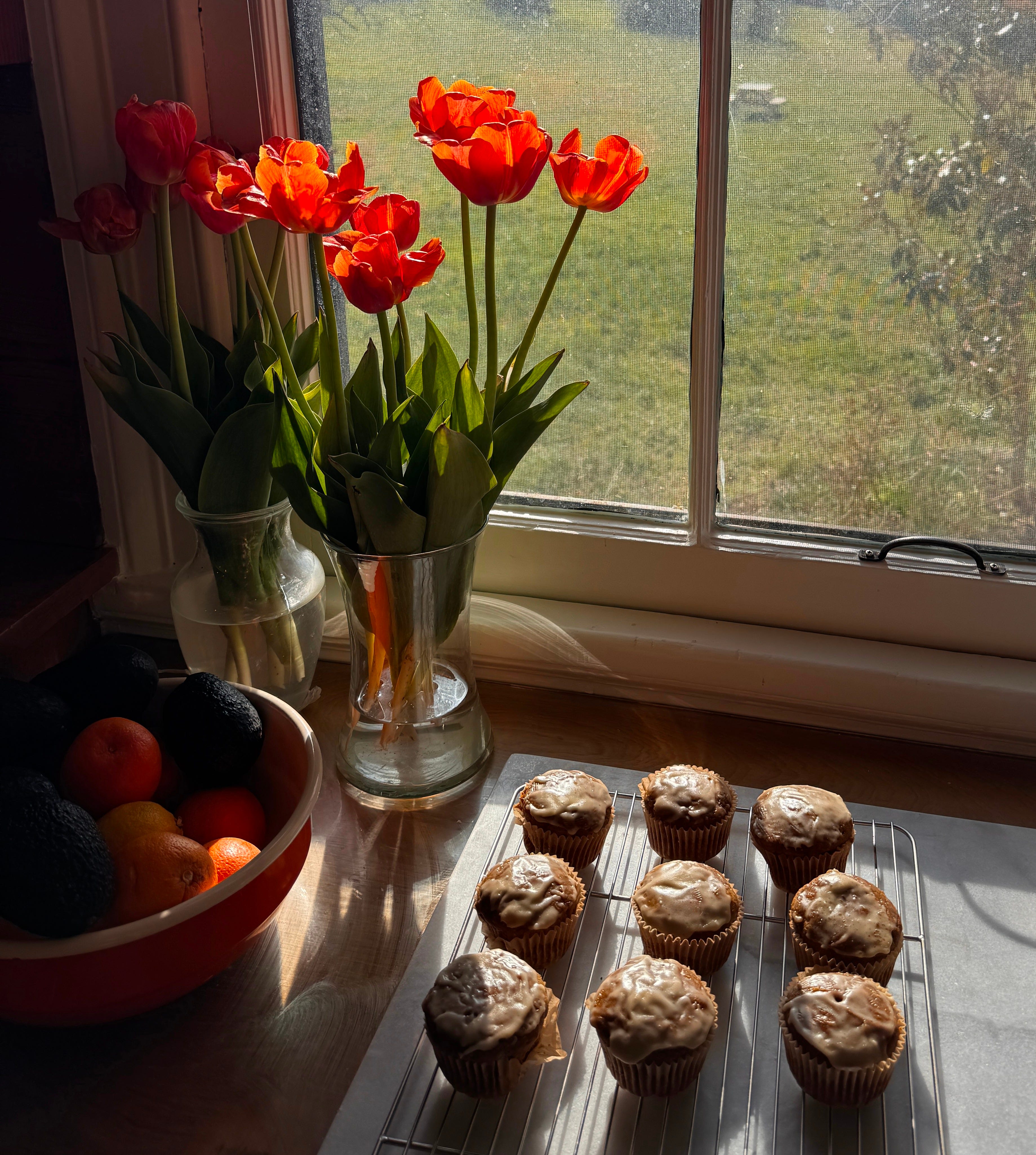
Those slower evenings are also when I’ll usually bake something. I’ve always had a sweet tooth, but making cookies or brownies with better ingredients has made it feel like an enjoyable part of the routine. I love a good scoop of vanilla bean ice cream—there’s one from Straus (I get it at Sprouts here) that’s my favorite—and having it with warm cookies has become such a treat. It’s something I love making with Poppy too, especially when she pulls a chair up to help stir. Jadyn’s coming to visit again this weekend for Easter, and I’m already thinking through what meals we’ll cook while she’s here. Prepping and shopping feel more purposeful when you’re planning for something meaningful—and I’m really looking forward to making some of her favorites, including sourdough cinnamon rolls with cream cheese frosting.
Lunch has taken on its own routine lately. Most days we either have leftovers from the night before or make smoothies—and sometimes it’s both. The kids love smoothies, and we’ve settled into a combination that works really well for us: frozen blueberries, milk, hemp hearts, chia seeds, Brazil nuts or walnuts, frozen cauliflower, broccoli microgreens, and Epic vanilla protein powder. It’s simple, nutrient-dense, and something they genuinely enjoy.
Breakfast is usually really simple too—most mornings it’s yogurt and eggs. The kids love adding things like chia seeds, hemp hearts, cacao nibs, and a little honey to their yogurt. It’s easy, it fuels them well, and it’s become a familiar part of our mornings.
What’s changed the most, though, is how I approach mealtimes. Before, I’d sit down for lunch with the kids but also have my phone open, checking emails or finishing up a task. I treated meals like a time slot to multitask—something to get through. But now I’m trying to view them as moments.
Lately, I’ve noticed how different the energy is when I’m fully there. Poppy will ask if she can help pour in the smoothie ingredients, or Elliott will giggle at something completely random, and I catch myself actually noticing those moments instead of thinking about what I’m behind on. Even just talking about what we’re eating or what we’re doing later that day—those little conversations have started to mean something. And the kitchen table is becoming less of a pitstop and more of a gathering place.
Cooking still doesn’t come naturally to me. I have to work at it. I’m still Googling substitutions and second guessing how long something should bake. But I’ve noticed small moments of growth: realizing which vegetables I can swap based on what’s in season, or which ingredients I can replace with something I already have. Before, I’d feel completely thrown off if a recipe called for something I didn’t buy. Now I’m learning to adjust. Not every meal is beautiful or picture-worthy, but there’s something satisfying about seeing a meal come together that you made from scratch.
This is also the most consistent we’ve ever been with eating at home. A year ago, I was ordering takeout more nights than I’d like to admit, and honestly, I didn’t think that was going to change. Cooking felt overwhelming and time-consuming. But now it’s something I actually look forward to—maybe not the chopping or the cleanup, but the feeling of putting a meal on the table that I had a hand in creating. It’s helped me see meals as small acts of care. Not just for my family, but for myself too.
And not every dinner is a perfect match for the kids. The other night, Poppy said she just wanted yogurt for dinner, so that’s what she had. But for the most part, they eat what we eat—and not having them snack too close to dinnertime has helped a lot. I usually give them something around 2:30 after their naps, but after that we try to hold off so they’re actually hungry at dinner. It’s taken some trial and error, but slowly we’ve figured out what works for this season.
And the consistency really has made a difference. I saw on my recent bloodwork that my health is trending in a positive direction, and I have no doubt that the meals are helping. This is the most we’ve ever eaten at home, consistently, and it’s been such a reminder that these small changes really do matter. Not just for how we feel—but for how we’re living day to day.
I know not everyone is in a season where cooking feels easy or enjoyable—and that’s okay too. I’ve had those seasons (most of my life until last year). Some days, dinner is just getting something on the table that fills everyone up. But if you’re starting to feel a shift—like you want food to feel more peaceful, more grounded, more intentional—maybe start with one meal. One hour. One small adjustment that works for your family.
Here’s what’s been helping me lately:
– Sheet pan dinners a few times a week to keep things easy
– Sitting down for lunch without multitasking
– Sticking to simple meals with ingredients I feel good about
– Planning meals that work for our schedule instead of trying to follow an ideal routine
I’ll share more soon as I keep experimenting and adjusting to what works here in this season. And if you have meals or habits that have been working for you—I’d love to hear. This is a space where we can learn from each other.
Thanks for being here,
Brittany
P.S. We just posted a new YouTube video with a peek into a day in our life here in Tennessee if you want to see what this season’s been looking like for us lately. And there’s a brand new episode of the podcast up too—we’re talking about finding calm in our daily schedule and some of the small, practical things that have been helping us lately.
Here is the recipe! - https://www.ambitiouskitchen.com/moms-slow-cooker-beef-stew/
Mine looks different because I made swaps for the seasonal veggies I had, but still came out so tasty!
What is the recipe for the beef stew?